base layers
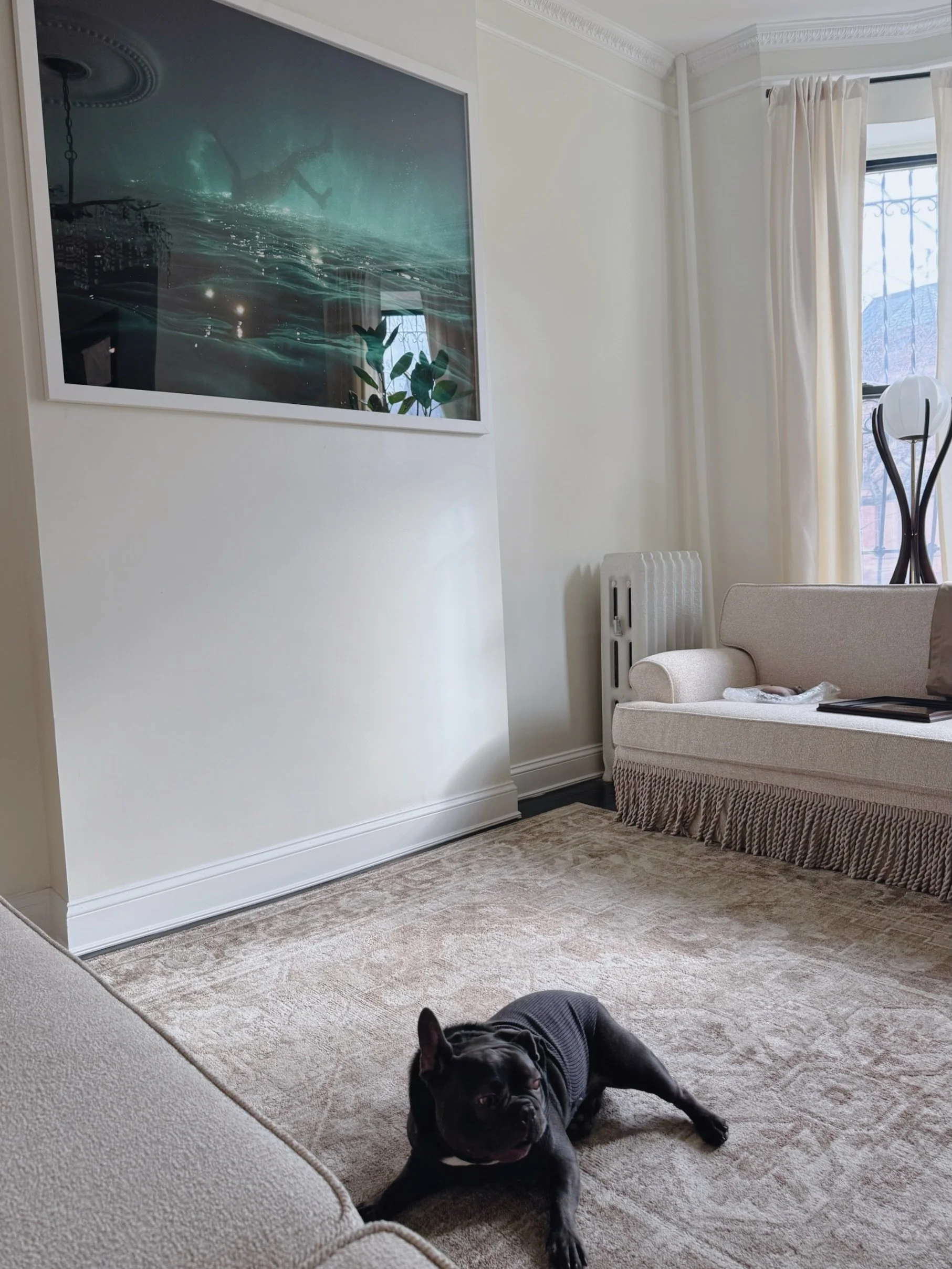
With an open floor plan, the foundational elements, the things you might not otherwise notice first, are what give a home its coherence. They set the stage for everything else, providing rhythm and context while allowing for distinct moments within a single, flowing space. On the parlor floor, I wanted each area to feel like its own world while still flowing into the next.
Molding: The ceilings and baseboards were my first chance to set a kind of rhythm. I chose a leaf-and-dart trim to echo the detailing on the home’s exterior facade, a nod to the original character that had been stripped away over decades of rental use. Beneath it, a second, thinner horseshoe molding was added, carefully shaped by my contractor to keep the detail I loved without feeling heavy. Both trims were painted Chantilly Lace, a true, bright white, which helps bring light into corners and under the stairwell. I even liked how the leftover pieces were repurposed at the base of the boards, giving the edges a seamless, rich feel that seems quietly of the period.
Walls: Choosing the base color was something I wanted to be really intentional about. I landed on Minced Onion, a white with a chartreuse/citrus undertone, after going through many samples. In the front of the house, it feels crisp and airy, reflecting the green of the trees that line our block. In the south-facing rear, it warms to create a more inviting embrace. I loved how it interacts with the neutrals of the upholstery, drapery, and rugs, and how it complements the brown onyx stone in the kitchen. There’s something subtle about it—a playful lift behind a calm white—that makes the space feel like it’s breathing, without being fussy.
Millwork: I wanted the wood throughout the house to carry everything else in the space, the furniture, fabrics, artwork, and architectural details. We stripped and stained all the hardwood to a deep espresso brown, a shade rich enough to anchor the warmer neutrals while still letting subtle variations show through. The stain holds differently in different spots, adding texture and depth that I think will evolve over time. Compared with the lighter oak that was originally in the house, and that I loved in my Harlem condo, this darker wood feels weighty, grounded. I also love how it makes the black cabinetry in the kitchen feel bold and modern, matte and minimalistic, while still letting the warmth of the parlor shine.
Hardware: The finishing touches of hardware were another place to bring in something personal. I chose oil-rubbed bronze dimmer switches and vintage-inspired fittings, inspired by the traditional design of the townhomes I saw while living in London. I grew up visiting family there and wanted to bring a little of that old-world feeling into this space in a subtle way. Choosing to do that through hardware felt right, rather than a bigger design choice that would be overwhelming.
Layering the parlor floor from the ground up was an exercise in finding balance. In honoring history while creating a space that feels lived-in, connected and at ease.
More soon,
L